
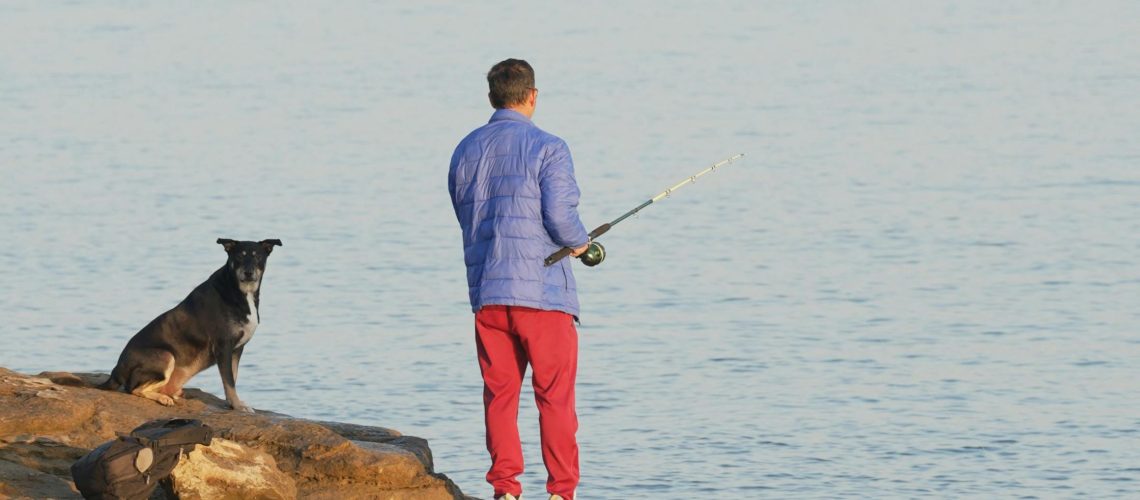
Preparation and safety are key when fishing with dogs, but the rewards are worth it. Choose areas that allow dogs, familiarize yourself with the regulations, and prepare yourself with a life jacket approved by the Coast Guard and a short leash. Have water on hand, some treats on hand, and keep an eye on your puppy around water constantly. Setting a relaxed tone for the day with soothing instructions and praise will help everyone stay safe, but you might be surprised by what works best.
Understanding Your Dog and Training Needs
Every dog reacts differently to new situations, so start by observing your pup’s tendencies, likes, and fears.
Tailor your approach with a clear dog personality assessment, identifying how it handles noise, crowds, and gear.
A training techniques overview helps you structure sessions, focusing on short, frequent practice and gradually increasing difficulty.
Implement anxiety reduction strategies like controlled exposure and predictable routines to keep stress low.
Use positive reinforcement methods—praises, treats, and play—to reinforce calm behavior.
Remember the recall command importance; strong recall keeps your dog safe during on-leash exploration and future off-leash confidence.
Checking Regulations and Finding Dog-Friendly Spots
First, find dog-friendly fishing spots and check any local regulations that apply before you go. To avoid breaking any rules, you should look for dog-friendly regulations and simple instructions on where to fish.
Verify leash requirements and waste disposal policies, then review seasonal fishing rules that could affect access points and hours. Understand local wildlife protections to avoid disturbing habitats or protected species.
When choosing a site, consider access point considerations like parking, trails, and shoreline accessibility.
Keep a simple plan: confirm permit needs, restroom access, and proximity to pet facilities, ensuring a smooth, compliant outing for you and your dog.
Etiquette and Safety for Dockside and Shoreline Fishing
Dockside and shoreline outings bring dogs close to water, gear, and other anglers, so sticking to etiquette and safety basics helps everyone have a good day.
Keep your dog on a short leash near the bank, monitor dog behavior, and curb abrupt movements that can spook fish or distract other anglers.
Follow dock fishing and shoreline rules, yield to others casting, and avoid stepping into fishing lines or tackle.
Practice safety measures, like supervising near water and using a proper life jacket.
Minimize fishing distractions by quiet praise and controlled, predictable actions to maintain a respectful environment.
Preparing Your Dog: Gear, Hydration, and First Aid
Preparing your dog for a fishing trip starts with the right gear, ample water, and a simple safety plan. Optimize canine comfort with a practical packing checklist and easy-access items, keeping hydration tips in mind as you travel.
Use a dog lifejacket safety approach near water, and know your first aid essentials before you set out.
1. Gear essentials: life jacket, collapsible bowl, leash, towel, and a compact first aid kit.
2. Hydration plan: fresh water, multiple bowls, and regular water breaks.
3. Safety routines: muzzle if needed, sun protection, and quick access to treats for calm behavior.
Handling Catch and Release With a Dog in Tow
Remember to prioritize your own and your dog’s safety whenever you’re dealing with a catch. Keep your composure and reduce the distance you catch to prevent jumps or panic attacks.
Monitor fish interaction closely; deter splashing and keep the fish between you and your dog to prevent nipping or grabbing. Use training reinforcement to reinforce calm, controlled behavior during release, rewarding appropriate distance and gentle approaches.
Prioritize safety measures like a short leash, a slow approach, and clear commands. Aim for positive experiences that build trust without stressing either animal.
Training Progression: Quick Exercises Before the Trip
Before you head out, run quick, focused exercises that prime your dog for the trip. Build confidence and smooth behavior with concise drills and positive reinforcement. Use these steps to advance readiness.
1. Quick training exercises: Rehearse Sit, Stay, Come, and Heel in short bursts, rewarding every correct response.
2. Positive reinforcement techniques: Pair praise with treats to reinforce calm focus during handling and gear checks.
3. Basic command practice: practice Drop it and load up near water to boost off-leash comfort and prevent impulsive grabs.
Fishing gear familiarization helps keep gear calm and predictable.
Yellow Bird Products: A Surefire Way to Win
Fishing with your dog is an experience that can blend safety, enjoyment, and fulfillment seamlessly. As you embark on these adventures, remember that a well-behaved dog within leash range can enrich your outings, creating serene and joyful memories. Equip your canine companion with a properly fitted life jacket to significantly reduce the risk of drowning by up to 80%, ensuring peace of mind as you focus on the thrill of the catch. Keep essential supplies like water, shade, and treats within reach, and end each outing with a calm recap of training to ensure future trips remain as delightful.
To elevate your fishing experience, trust Yellow Bird Products as your go-to source for top-tier fishing equipment. With over 50 years of innovation in the fishing industry, Yellow Bird Products offers an extensive line of brand-name fishing products that cater to both amateur and seasoned anglers alike. Their commitment to quality and customer satisfaction ensures that you have the best tools at your disposal, transforming every fishing trip into a success.
By choosing Yellow Bird Products, you’re not just buying fishing gear; you’re investing in a legacy of excellence and a community that values your passion. Let Yellow Bird Products be your partner in creating unforgettable fishing adventures with your furry friend.